What is a TBR pile, and how do you actually get through it?
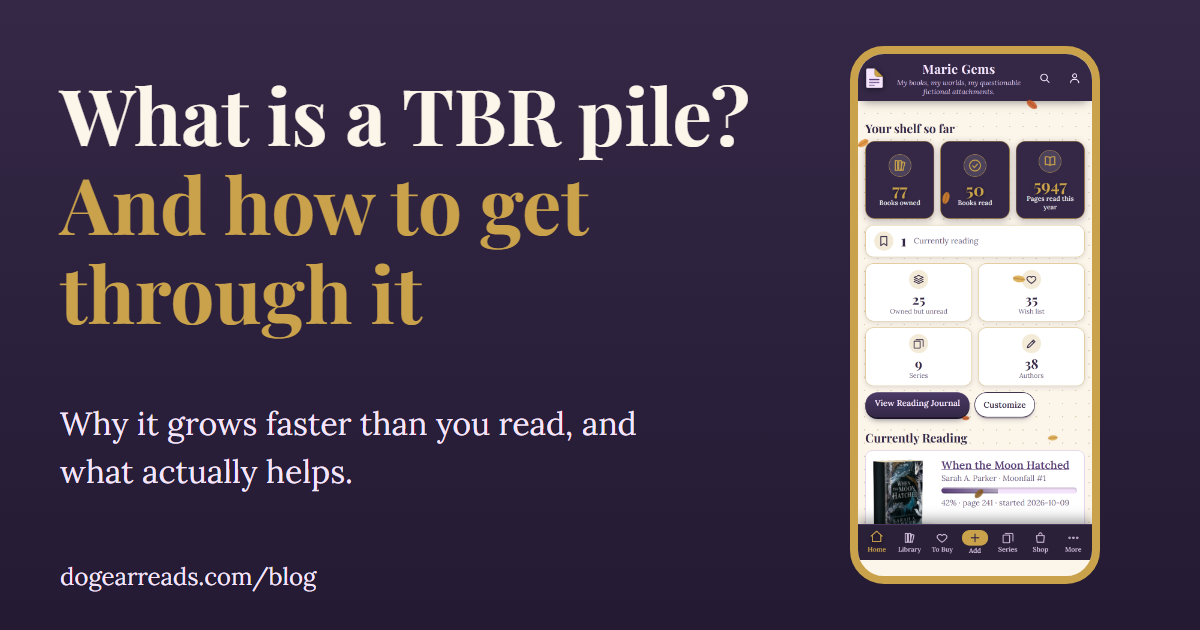
The short answer: A TBR, short for "to be read," is the pile or list of books you plan to read, whether that is a stack by your bed, a shelf, or a list on your phone. It grows faster than you read because adding a book takes seconds and reading one takes hours, and what helps most is splitting it into books you own and books you only want, then choosing your next read by a simple rule instead of by guilt.
A TBR pile is the stack of books you mean to get to, and almost every reader has one. If yours has grown past what you can read in a year, that is normal, and it does not mean you are doing reading wrong. This guide covers what a TBR is, why it keeps growing, what actually helps you get through it, and what you can stop feeling bad about.
What is a TBR pile?
TBR means "to be read." Readers use it in three slightly different ways, and it helps to know which one someone means.
- A TBR pile is usually a physical stack: books you already own and have not read yet.
- A TBR list is the same idea written down, on paper, in a notes app or on a shelf in a reading app. Some people include books they do not own yet.
- A wish list is books you want to buy or borrow one day. Plenty of readers keep this apart from the TBR so the pile only holds books they can start tonight.
There is no official rule, so pick the definition that is useful to you. The split that helps most is simple: books you own, and books you only want.
Why a TBR pile grows faster than you read it
- Adding a book is quick and reading it is slow. Saving a title takes a few seconds. Finishing it takes hours, spread over days.
- Good books keep arriving. Recommendations, sales, library finds and the next book in a series all land faster than a person can read.
- Your mood changes. A book you were excited about in spring may not suit you in autumn.
How big is a normal TBR?
There is no normal. In an old reader poll run by Book Riot in 2014, with 1,092 respondents, the average TBR list was 335 books, the most common answer was 100, and the answers ranged from 0 to 5,083. The same poll found readers owned an average of 190 books they had not read yet. Book Riot shared the results here. It is old and everyone counted differently, but a TBR in the hundreds is clearly common.
What actually helps you get through a TBR pile
- Separate what you own from what you want. A pile you can start tonight feels very different from a pile that includes books you have not bought.
- Read one to three books at a time, not ten. A short list of books in progress keeps you moving. A long one makes every book feel half done.
- Pick the next book with a rule, not a debate. For example: the next book in a series you have started, the shortest book on the pile, or the one that has waited longest. Or let a random pick decide.
- Prune honestly. If you looked at a book three times and felt nothing, take it off. A smaller list you want to read is better than a long one you dread.
If a pile has stalled because you are not in the mood to read at all, that is a different problem, and this guide to reading slumps may help more. If you are choosing how many books to aim for, here is how to set a reading challenge you will finish.
What you can stop feeling bad about
- Owning more books than you can read. A shelf of unread books is a supply of choices. It is only a problem if it bothers you.
- Not finishing a book. Putting a book down is allowed. Removing it from your pile makes room for one you will enjoy.
- Reading slowly. The pile has no deadline.
How to keep a TBR in Dog-Ear
Dog-Ear is a reading tracker, and its screens already split a TBR the way described above. Here is where each part lives.
| What you have | Where it is in Dog-Ear |
|---|---|
| Books you own and have not read | The Owned but unread tile on Home, and the TBR page under More. |
| Books you want but do not own | The Wish list tab on To Buy. |
| Books someone suggested that you are not sure about | The Recommended tab on To Buy. |
| The book you are reading now | Currently Reading on Home. |
| You cannot choose | Pick My Next Book, under More. |
Home shows your Currently reading, Owned but unread and Wish list counts as tiles you can tap. Owned but unread leaves out cookbooks, reference books, journals and coloring books, since those are not meant to be read cover to cover.
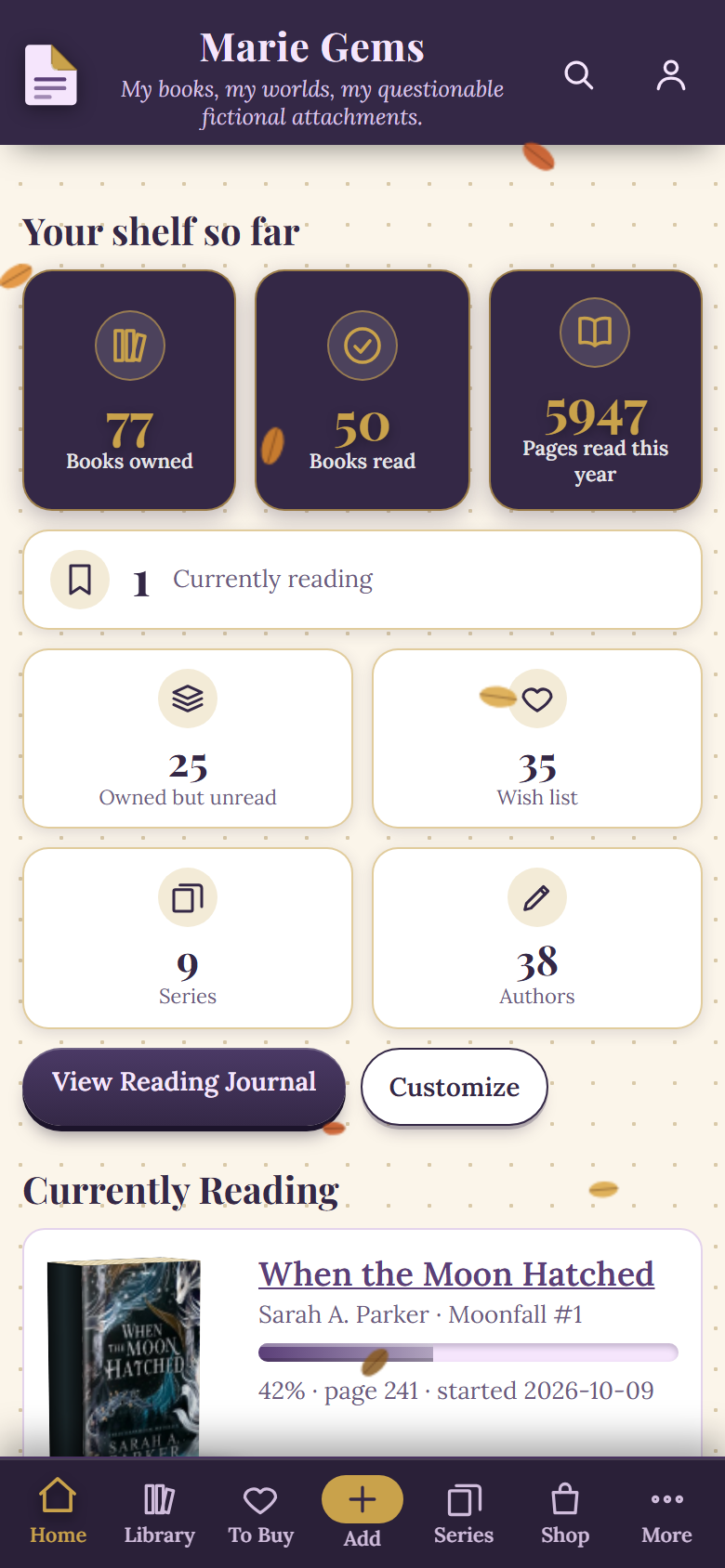
Home in a sample library: Currently reading, Owned but unread and Wish list.
The To Buy page has two tabs. Wish list holds books you want. Recommended holds books someone suggested that you have not decided on, with a place for who recommended it and a note. Each one has Yes, I want it (moves it to your wish list) and Not for me (takes it off). Recommended books are kept out of your wish list count until you say yes.
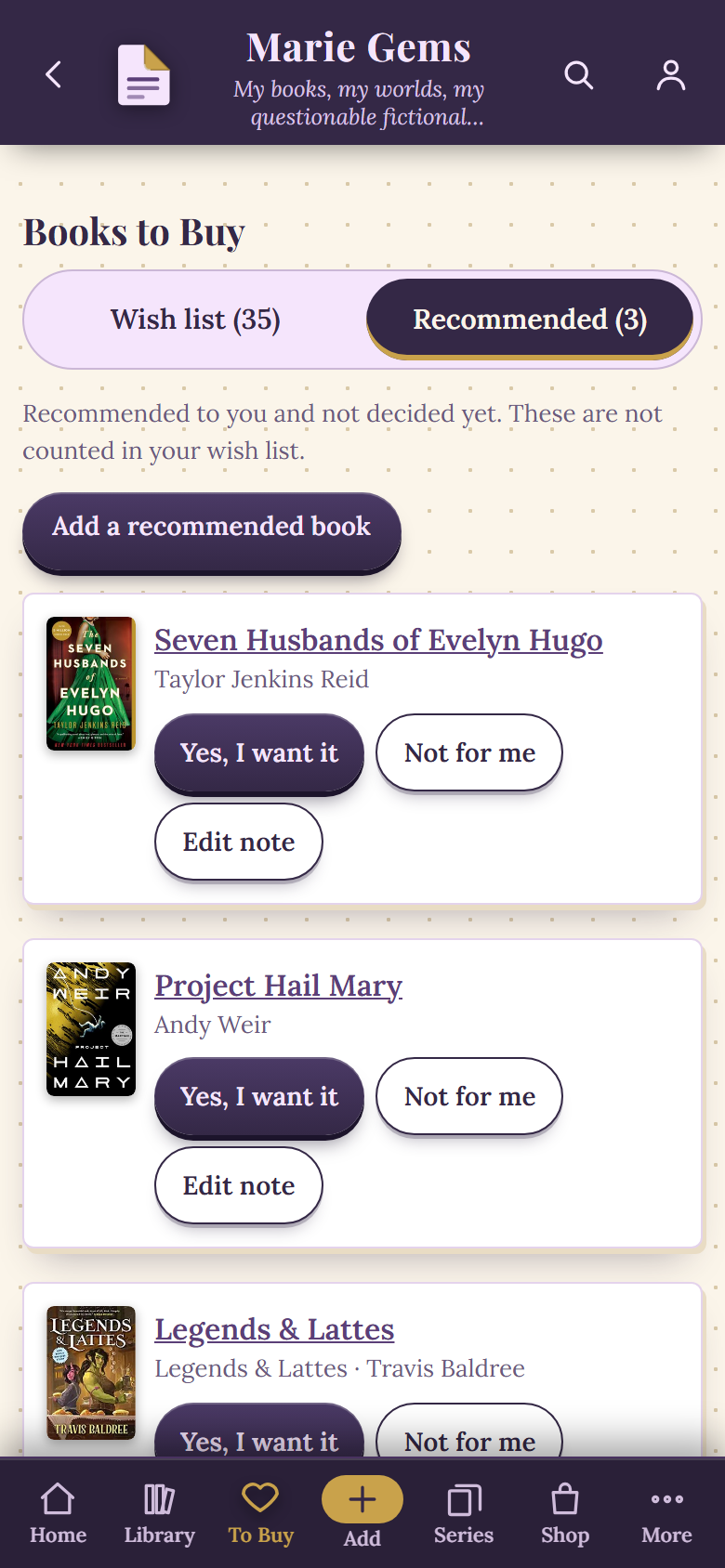
The Recommended tab in a sample library.
The TBR page lists your owned books that have not been read, with filters for genre, author, series, format and length. Pick My Next Book chooses for you from your shelves or your wish list. Pick a mood such as Continue a Series or Shorter Read, and spin. From a series, only the next unread book comes up, so you are never handed book three before book one.
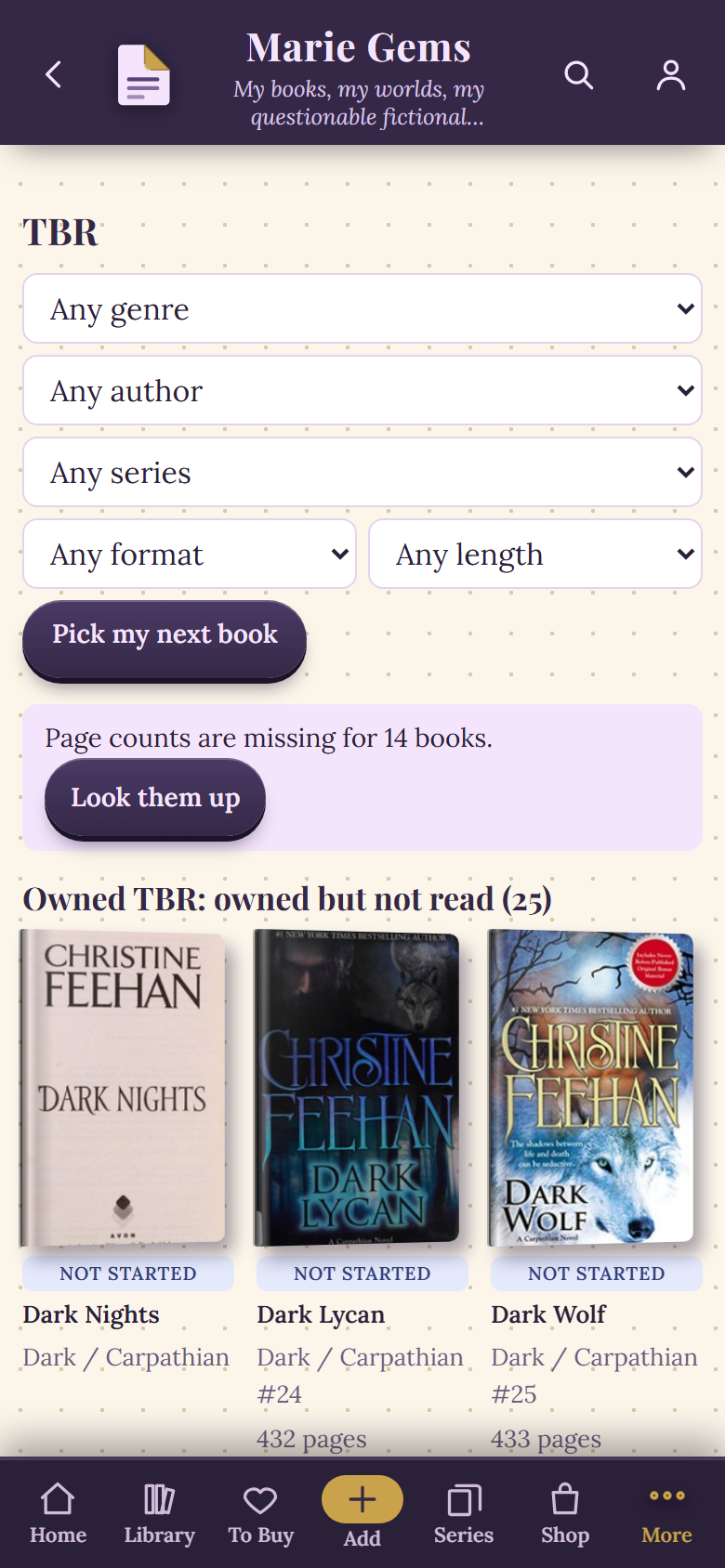
The TBR page in a sample library.
How the free 50 books counts your TBR
This matters if you keep a big TBR. On Dog-Ear's free plan, every book in your library counts toward the 50, including books on your wish list and on the Recommended list. A long wish list can fill the free plan before your shelves do. Removing a book you no longer want takes it out of the library and frees the space. Here is what the free plan includes and how the 50 is counted.
When this is not for you
You do not need an app for this. If your TBR lives happily in your head, on one shelf, or in a paper notebook, and it does not stress you, keep it there. Dog-Ear helps most when you want to see owned books and wanted books apart, want a nudge to choose what is next, or keep a list too long to hold in your head.
To fill the lists quickly, scan a book in a store to save it, or scan a whole shelf with Rapid Scan. Reading a long series? See what you own and what is missing.
Give your TBR a home
Keep what you own apart from what you want, and let Pick My Next Book settle the debate. $29, one time, no subscription, with a free plan to start.
Get Dog-Ear for $29Questions
What does TBR mean?
TBR stands for "to be read." It is the list, shelf or pile of books a reader plans to read, and many readers use it for the books they already own but have not read yet.
What is the difference between a TBR pile and a wish list?
A TBR pile is usually books you already own and have not read. A wish list is books you want but do not own yet. Keeping them apart makes it clear what you can start tonight and what you still have to buy.
Why does my TBR keep growing?
Saving or buying a book takes seconds and reading one takes hours, and new recommendations, sales and series arrive all the time. A TBR grows whenever books come in faster than they are finished, which is true for most readers.
How do I get through my TBR pile?
Keep owned books apart from books you only want, read one to three at a time, pick the next book by a simple rule such as the next book in a series you started, and remove books you no longer want to read.
Do wish list books count toward Dog-Ear's free 50 books?
Yes. On the free plan every book in your library counts toward the 50, including books on your wish list and the Recommended list. Removing a book you no longer want frees up room.
Related: Reading slump causes and fixes, How to scan books in a bookstore and save them for later, A free book tracker for your first 50 books.