Reading slump causes and fixes: what to try for each one
The short answer: a reading slump usually comes from one of a few causes: a tired brain, a book hangover, a book that is not working, too many choices, or pressure to hit a goal. Work out which one fits you, then try one small fix for it, such as a few pages a day, a short book, a reread, or putting the wrong book down.
Reading slump causes and fixes are easier to sort out than the internet makes them sound. Most advice is a long list of tricks. A slump is not one problem, though, and a trick that helps a tired reader can make a pressured reader feel worse. So start with the cause.
Which reading slump do you have?
Read down the first column and stop at the one that sounds like you. Many people match two.
| The cause | What it feels like | What to try first |
|---|---|---|
| A tired or busy brain | You open a book and your eyes slide off the page. Life is full right now. | Read five pages and stop. Or take a planned break and do not count it as failing. |
| A book hangover | You loved the last book so much that everything after it feels flat. | Reread a favorite, or pick something very different in length or genre. |
| A book that is not working | You keep picking it up and putting it down, and it is eating your reading time. | Put it down. You can come back later. |
| Too many choices | You have a huge pile and cannot decide, so you read nothing. | Shrink the pile to a few books, or let something else choose. |
| Pressure | A goal, a book club or a trend has turned reading into homework. | Lower or change the goal. Read what you want for a while. |
| Too much of one genre | Every plot feels like the last one. | Try a different genre, a graphic novel, or a short book. |
| Screens and distraction | Your phone wins every time you sit down to read. | Put the phone in another room, or read in a different spot. |
These are patterns that librarians and reading bloggers describe, not research results. Your own slump may not fit neatly, and that is fine.
Fixes in more detail
If a book is not working, put it down
Forcing yourself through a book you chose for fun can use up the energy you need for the next one. Giving up on a book after a few chapters is allowed. If you read for work or a class, that is a different case, and you may have to finish.
In Dog-Ear, a book you are reading has a Didn't finish button. It saves the book to the DNF Graveyard page of your Reading Journal, where you can note where you stopped, why you quit, and whether you will try again: yes, maybe someday, or no, never. There is also a Put back on shelf button if you only want to pause it.
If you have too many choices, shrink them
A big pile can freeze you. One trick readers share is to pull a small handful of books out of the pile and read only from those until you are moving again.
Dog-Ear has Pick My Next Book, under More. You choose where to look (your shelves, something new, or your wish list), pick a mood such as Surprise Me, Shorter Read or Reread, and tap Spin. It picks one book from the books you own and have not read. If a book is part of a series, only the next book in order comes up. The Shorter Read mood uses page counts, so books with no page count are left out until you look them up.
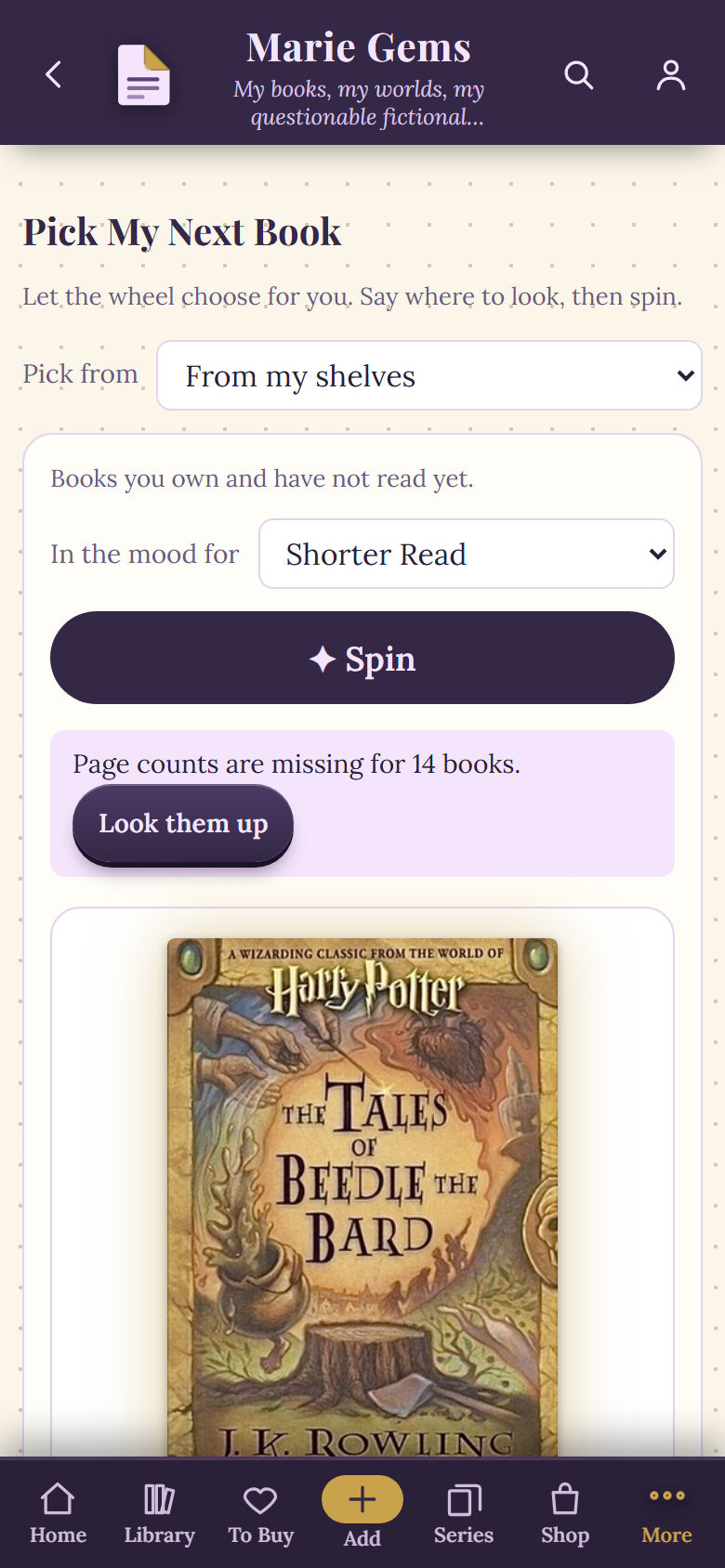
Pick My Next Book with the Shorter Read mood, in a sample library.
If nothing feels good, reread a favorite
Rereading is one of the most common fixes because you already know you will like it. There is no risk of picking another dud.
In Dog-Ear, the 5-Star Reads page of your Reading Journal collects your five star books on a shelf, with a hero spot for your favorite and a line for why you love each one. It is a handy place to browse when you cannot decide what to reread. Five star means exactly 5.0 stars, so a 4.5 is never rounded up. The Reread mood in Pick My Next Book will also choose a book you own and have finished.
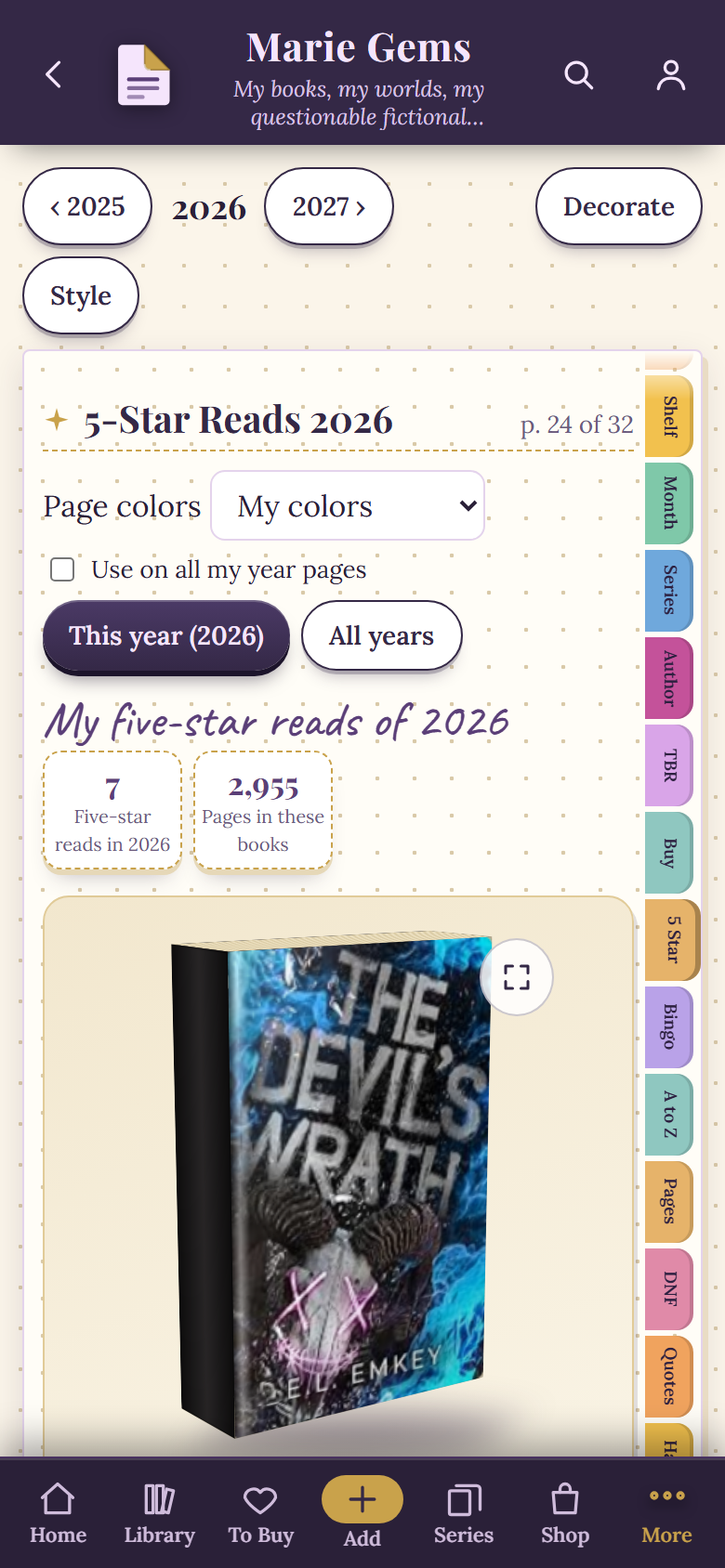
The 5-Star Reads page, in a sample library.
If you are tired, lower the bar
Aim for five pages, not a chapter. Five pages is small enough to say yes to on a bad day, and some days it turns into more.
The Currently Reading page shows each book with a progress bar, and you can update it by page or by percent. Dog-Ear also has a Reading Reminder under More: one gentle notification a day, at a time you pick, that you can turn off whenever you like. The reminder needs a browser that supports notifications, and on an iPhone you add Dog-Ear to your Home Screen first.
If a goal is the problem, make it kinder
A yearly goal can motivate you or weigh on you. If it is the second one, change it.
On the Reading Challenge page of the journal, you set a goal for the year and each book you finish fills in a spine on the shelf. You can tap Change goal at any time. Rereads count toward the total, so rereading a favorite does not set you back.
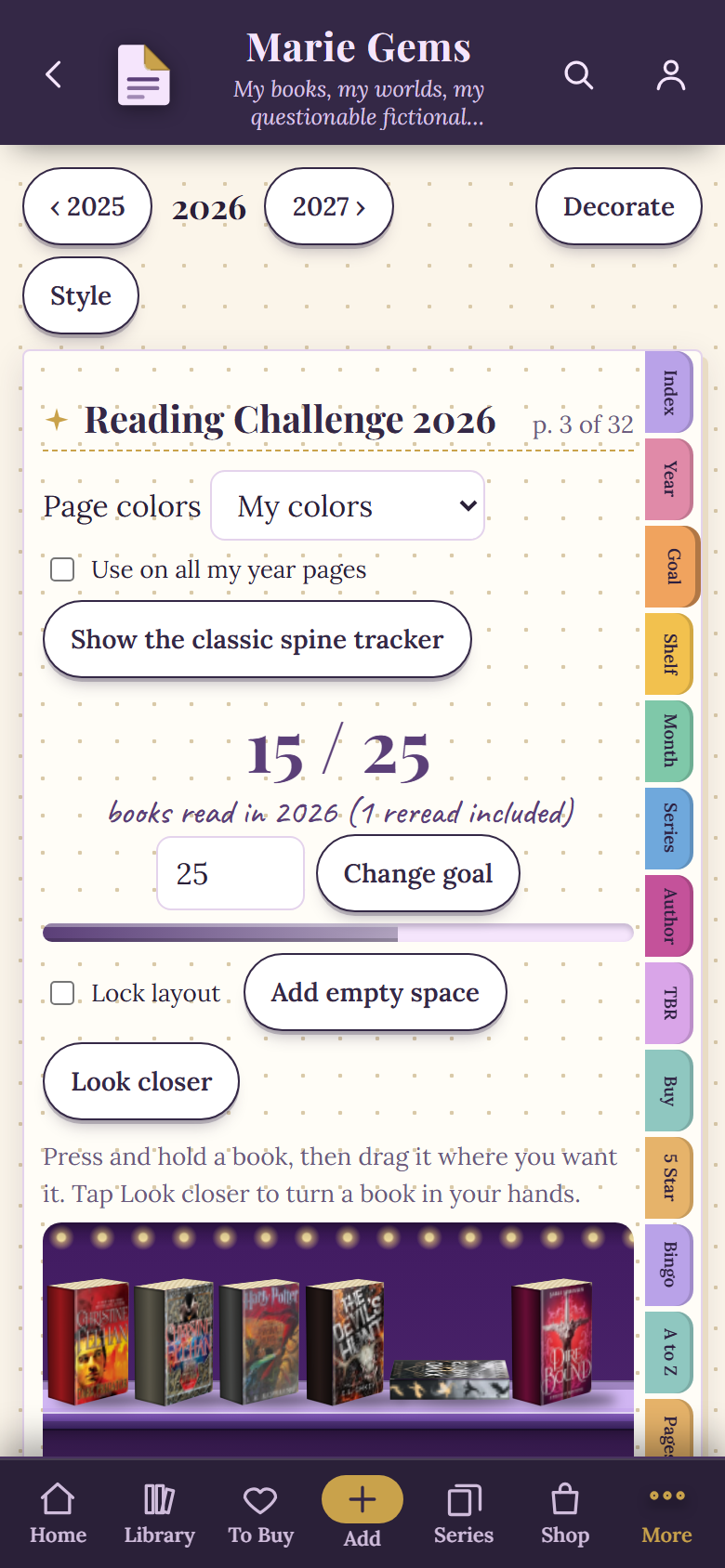
The Reading Challenge page with a goal you can change, in a sample library.
Slump tips that need no app
- Switch format. An audiobook during chores, a graphic novel, or a novella can feel lighter than a long novel.
- Change where you read. A different chair, room or coffee shop breaks old habits.
- Move the phone. Keep it in another room for twenty minutes.
- Borrow instead of buying. A library hold gives you something exciting waiting, with no guilt about the shelf at home.
- Take a real break. Some readers step away from books for a week or two and find they miss them.
When a tracker is not for you
Some readers say that counting books or minutes made their slump worse. If that is you, log only the books you finish, or use nothing at all for a while. Dog-Ear has no streaks or reading timers, and the journal is optional, but if numbers stress you out, skip them and read first. Also, if you suddenly cannot read or concentrate and it comes with other changes such as headaches, vision problems or a low mood that will not lift, it is worth talking to a doctor or eye care professional. This post is not medical advice.
Where these ideas come from: reading advice from Book Riot (November 27, 2023), the Kent District Library blog (March 2, 2026) and a reader's post on overwhelm (August 28, 2024). We summarized them in our own words.
Make it easier to start reading again
Pick a book for you, keep your favorites close, and set a goal you can change. $29, one time, no subscription.
Get Dog-Ear for $29Questions
What causes a reading slump?
Common causes are a tired or busy brain, a great book that nothing else can match, a run of books that did not suit you, too many choices, pressure from challenges or obligations, and too much of one genre. Many readers have more than one cause at once.
How long does a reading slump last?
There is no set length. Many readers say it passes in days or weeks once they ease off and read something that suits them, but this is common experience, not a measured number.
What is the fastest way to get out of a reading slump?
Match the fix to the cause. If you are tired, read a few pages or take a break. If a book is not working, put it down. If nothing feels good, reread a favorite or pick something short.
Should I quit a book to get out of a slump?
If you chose the book for pleasure and it is not working, putting it down is a common and reasonable fix. In Dog-Ear you can mark it as did not finish and note where you stopped and whether you might try it again.
Can a reading challenge cause a reading slump?
For some readers, yes. A goal that feels like a deadline can turn reading into a chore. A smaller goal you can change any time is easier to live with. In Dog-Ear you can change your yearly goal whenever you like.
Can Dog-Ear help with a reading slump?
It can lower the effort of getting started. Pick My Next Book chooses from the books you own and have not read, the five star page collects favorites to reread, and the Reading Challenge page lets you change your goal. It will not fix a slump on its own.
Related: What a TBR is and how to get through it, How to set a reading challenge you will finish, A digital reading journal with stickers, Printable vs digital reading journal.