How to organise a bookshelf you actually want to look at
The short answer: to organise a bookshelf you want to look at, pick one system for finding books, such as author or series, and one touch for looks, such as height or color within each group. Keep series together, put big books low, leave a little empty space, and stop tweaking once you can find what you want.
A shelf can be easy to use or beautiful, and the trick is not to ask one rule to do both jobs. Start with how you actually look for a book, then add the look on top.
Pick a system for finding books
| System | Good for | Watch out for |
|---|---|---|
| By author | Finding a book fast, and keeping an author's books together. | An alphabetical shelf has to shift every time you add something in the middle. |
| By series | Readers who buy in sets, and anyone who hates a split series. | You still need a rule for standalone books and for how to order the series themselves. |
| By genre | Mixed collections, such as romance, fantasy and nonfiction. | Many books fit two genres, so you have to choose one. |
| By color | A display shelf, or a small collection. | It splits series apart and makes a specific book hard to find. |
| By height | A tidy, even line, especially with matching paperbacks. | It mixes authors and series unless you do it inside a group. |
If you want one default, group by genre or author, keep every series together in number order, and treat color and height as the last layer inside a group.
Keep series together, even when it looks messy
A series split across three shelves is the one thing that bothers most readers, so start there. Put the books in number order, with novellas in the place the author intended. If you are not sure which books you own or are missing, here is how to track a series before you shelve it.
Color: lovely, but use it carefully
A rainbow shelf is the most photographed way to arrange books, and it is a good choice for a small or purely decorative shelf. On a large shelf it makes finding a book slow, and it separates series. A middle path is to sort by author or series first and arrange the colors within each section.
Height, weight and what goes where
- Heavy and tall books go low. It is safer and it looks balanced.
- Match like with like. Hardbacks and paperbacks are different heights, so a jagged line often means mixed formats.
- Leave a little room. A shelf packed tight looks like storage. A gap or two looks like a display.
Read, unread and the to be read pile
Some people keep unread books together so the pile is visible, and some mix everything and use a list instead. Both work. Here is what to do with a to be read pile once you can see it.
What to do with oversized books
Art books, cookbooks and box sets rarely fit the line. Lay them flat on a low shelf, stack two or three together, or use one as a base for a plant or a lamp.
When to give up on perfect
Every system breaks when you buy a new book. If keeping the shelf in order is turning into a chore, simplify: pick the one rule you will really follow and let the rest go. A shelf you enjoy and can find books on beats a perfect one you are afraid to touch.
How to arrange your shelf in Dog-Ear
If you would rather try an arrangement before you lift a single book, Dog-Ear gives you a shelf you can rearrange freely. Your books stand on 3D shelves, on both Home and My Library, and your arrangement is saved to your library.
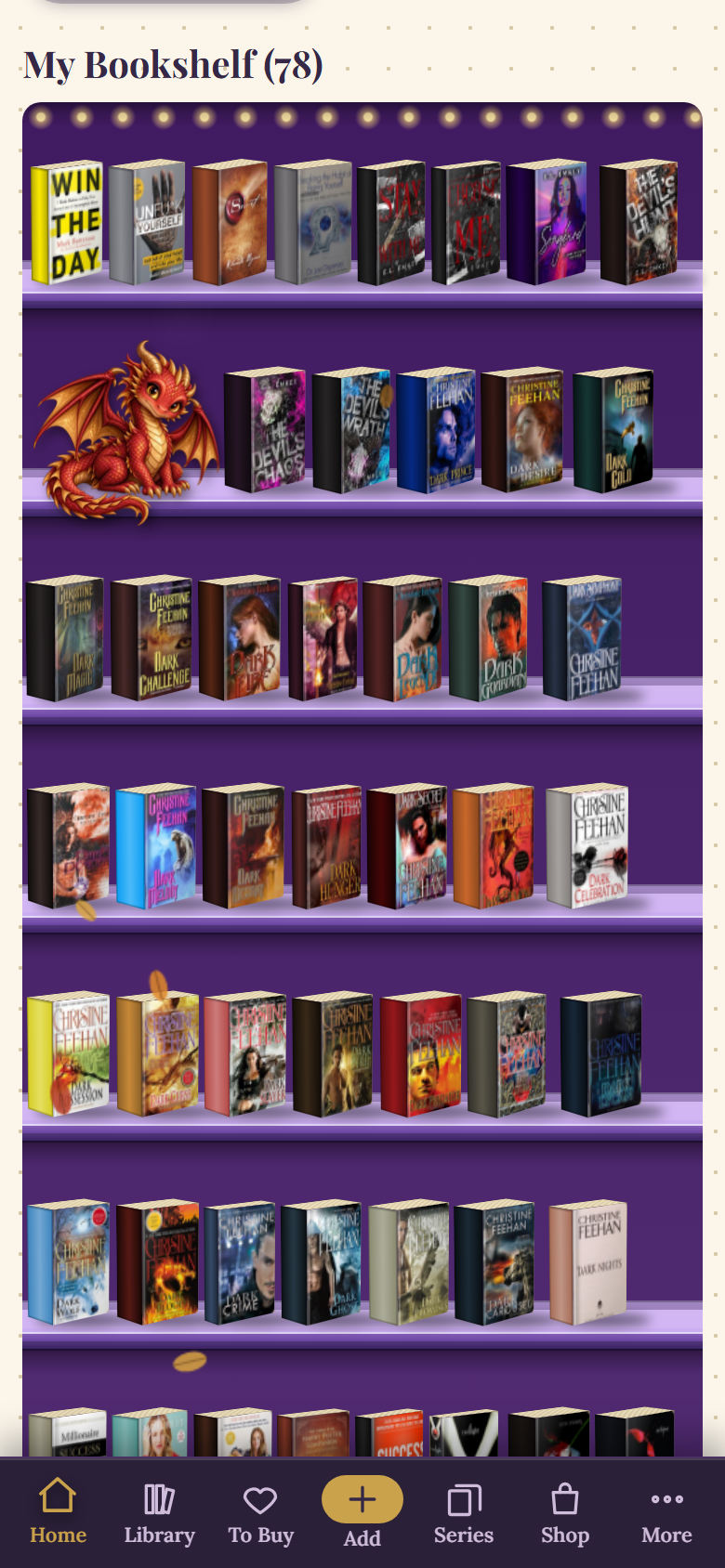
The My Bookshelf shelf on Home in a sample library, with a decoration on the second shelf.
- Choose an order. In My Library, the shelf order menu offers One shelf with series together, Series first then standalone, Standalone first then series, Series books only, and Standalone books only. The standard order goes by the author's last name and keeps each series together in number order.
- Pick a view. Switch between Shelves, Covers and List.
- Drag books where you want them. Press and hold a book, drag it, and let go. It stays on the row where you drop it, and your layout is saved as My arrangement.
- Name your shelves. Under Customize shelf, My shelves lets you add, rename and reorder shelves, so one can be Unread and another Favorites.
- Change how a book stands. Style my books lets you set a book to Cover out, Spine out, Edge out, or lying flat with the spine or the edge out, and change its height. That is how you handle an oversized one.
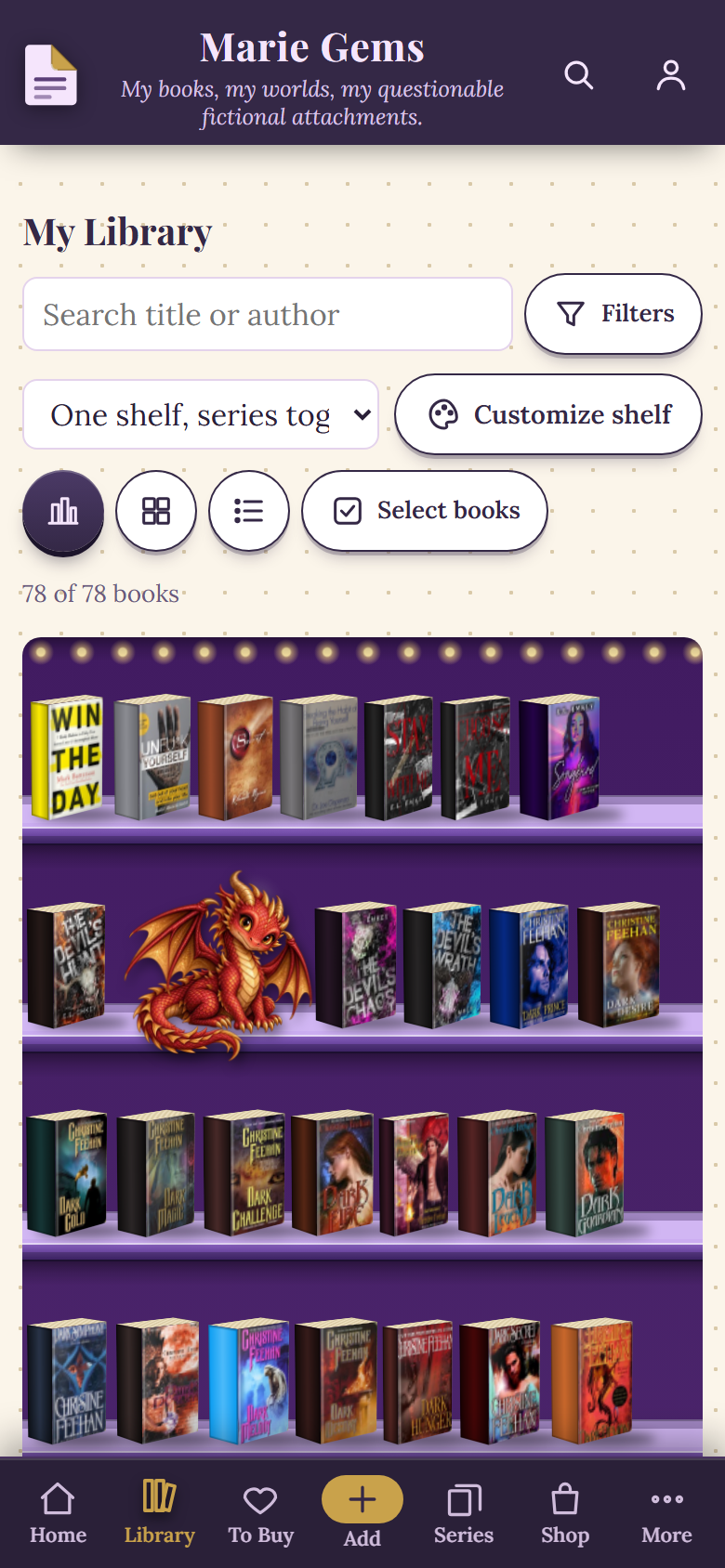
My Library in a sample library: the shelf order menu, the three views, and the Customize shelf button.
Shelf colors, the wall and decorations
Under Customize shelf, Shelf colors and wall changes the look of every shelf in the app. Pick the color of the boards from nine choices (Oak, Walnut, Ebony, White, Lilac, Pink, Sage, Navy and Gold) or choose your own, then pick a wall from eight colors or add your own picture behind the books. Decorate on my shelf lets you add decorations and move or resize them right on the shelf, with Save and Cancel at the bottom.
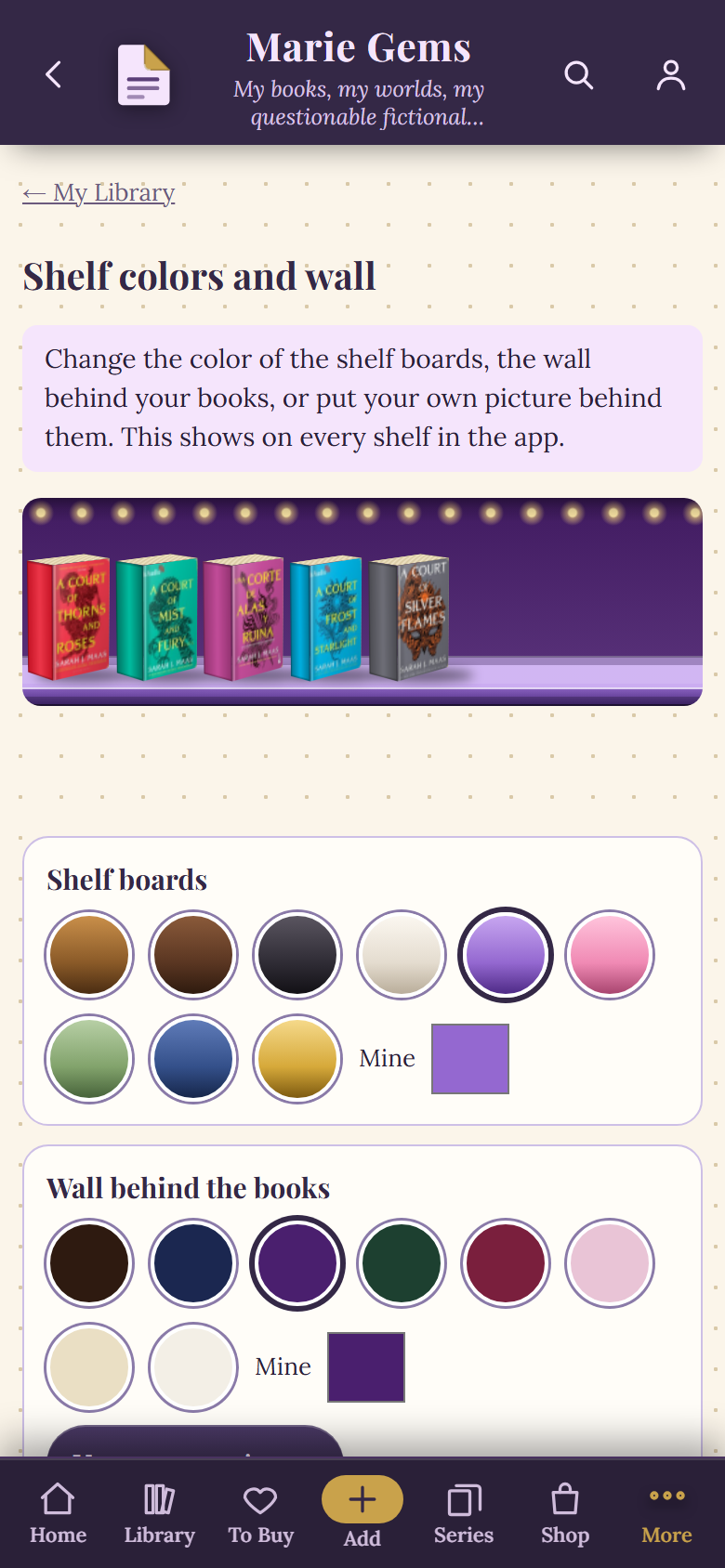
The Shelf colors and wall screen in a sample library: boards and wall are chosen separately.
Dog-Ear does not sort your shelf by color for you. If you want a rainbow, you place the books by hand. There is also no automatic read and unread shelf, but you can filter My Library to unread books you own, or name a shelf to hold them. If you like decorating, the reading journal has stickers and washi tape too.
Who this does not suit
If your shelf is a real one in a real room and you have no need to see it on a phone, you do not need an app to organise it. Dog-Ear helps most when you want to try an arrangement before moving heavy books, or to know what you own. To get your books in first, scan the whole shelf, or read how to catalogue a home library without quitting. The free plan holds 50 books, and here is what that covers.
Try a shelf arrangement without moving a book
Scan your books, drag them into order, and pick the boards and wall. $29, one time, no subscription.
Get Dog-Ear for $29Questions
What is the best way to organise a bookshelf?
Pick one system for finding books and one for looks. A common mix is to group by genre or author, keep each series together in order, and use color or height only as a finishing touch inside a group.
Should I organise books by color?
Color looks striking, but it breaks up series and makes books harder to find. It works best on a small shelf or a display shelf. Many readers sort by author or series first and use color only inside a section.
Where do oversized books go on a shelf?
Lay them flat on a low shelf, or stand them on the bottom shelf where the weight is safest. A few flat books stacked together can also work as a base for other things. In Dog-Ear you can set a book to lie flat, spine out or edge out.
Should I keep read and unread books on separate shelves?
It can help. A small unread section makes your to be read pile easy to see, and finished books can stay in their series or author order. Some readers prefer one mixed shelf and a filter in an app instead.
Can I arrange books by hand in Dog-Ear?
Yes. Press and hold a book on your shelf, drag it where you want it, and let go. A book stays on the row where you drop it. Dog-Ear does not sort by color for you, so a color arrangement is done by hand.
Does Dog-Ear cost anything to try?
The free plan holds 50 books, and the wish list and recommended books count toward that. The full version is a single payment with no subscription.
Related: How to track book series you own, A digital reading journal with stickers, Special editions and photos of your own copy.